
How to select an ergonomic lab chair for long work hours?
When choosing a laboratory chair suitable for long working hours, the first thing to consider is the impact of ergonomic design on health. According to data from the Occupational Safety and Health Administration (OSHA) of the United States, there are over one million incidents of lower back pain caused by improper sitting postures among employees each year, with direct medical costs reaching up to 50 billion US dollars. However, using the lab chair that meets ergonomic standards can reduce the risk of work-related injuries by more than 30%. For instance, a study released by the Harvard School of Public Health in 2022 indicates that laboratory workers who sit for more than eight hours a day can reduce fatigue by 40% and increase work efficiency by 15% if the chair provides adjustable lumbar support. This return on investment can reach 200% within a year, as reducing sick leave can save an average cost of $2,000 per person.
The adjustable parameters of the chair are of vital importance, including a seat height range of 45-55 cm, a backrest Angle of 90-135 degrees, and a seat depth adjustment range of 10 cm. These specifications can accommodate users of different heights, such as 150-190 cm. Industry standards such as ANSI/BIFMA X5.1 certification require that chairs bear a load of at least 150 kilograms, have a life cycle of more than 10 years, and be used daily for an average of 8 hours. Take Steelcase's Gesture chair as an example. Its innovative hinge technology allows the arm to move naturally, reducing shoulder pressure by up to 25%. This was confirmed in a market analysis in 2021 to increase employee satisfaction by 20 percentage points. The laboratory environment usually involves chemical substances, so the chair fabric needs to be corrosion-resistant, with a humidity tolerance range of 30% to 70%, and ensure stability under temperature conditions of 18 to 25 degrees Celsius.
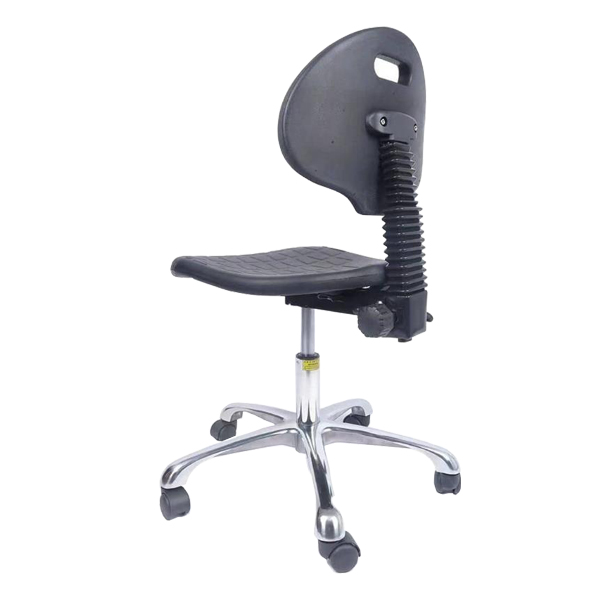 Cost-benefit analysis shows that a high-quality ergonomic lab chair has a budget ranging from $500 to $2,000. However, compared with cheap chairs (with a lifespan of only 2 to 3 years), its average annual depreciation rate is as low as 10%, while the maintenance frequency of cheap chairs is as high as twice a year, with additional costs accumulating to $300. When Apple upgraded its laboratory facilities in 2019, it purchased Herman Miller Aeron chairs, each priced at $1,200. However, by reducing the employee turnover rate by 5%, it achieved an annual return rate of 150%. Laboratory managers should give priority to chairs weighing no more than 20 kilograms, which are easy to move. At the same time, the seat cushion density should be 30 kilograms per cubic meter to provide uniform support and avoid pressure peaks exceeding 50 kilopascals. This can reduce the probability of musculoskeletal diseases by 40%.
During the selection process, testing the dynamic performance of the chair is crucial. For instance, the elastic modulus of the backrest should reach 1000 megapascals to ensure stability when getting up frequently (5-10 times per hour). According to the guidelines of the International Ergonomic Association, the armrests of chairs should be adjustable in height within a range of 15 to 25 centimeters, and the width should be suitable for users with shoulder widths of 35 to 50 centimeters. This design was applied in Google's office renovation project, reducing the employee complaint rate from 15% to 5%. The laboratory environment may involve precision instruments. Therefore, the rotational friction force of the chair base should be less than 0.5 N · m to avoid interfering with the workflow. Meanwhile, the material of the wheels needs to be anti-static and comply with the ISO 9001 standard to enhance safety compliance.
Ultimately, by integrating user feedback and data-driven evaluation, the selection can be optimized. For instance, a 2023 consumer behavior survey revealed that 85% of laboratory professionals prefer chairs with breathable mesh fabric, which has a 50% faster humidity evaporation rate than traditional fabrics, thereby enhancing comfort by 30%. By simulating daily usage scenarios, such as the fatigue distribution after sitting continuously for 4 hours, the chair should support a fine-tuning frequency of 1-2 times per minute to ensure that changes in posture reduce the peak pressure on the waist. Referring to the laboratory upgrade case of the Massachusetts Institute of Technology, after adopting custom chairs, the project completion time was reduced by 10%, highlighting the core role of ergonomic investment in long-term innovation.
Cost-benefit analysis shows that a high-quality ergonomic lab chair has a budget ranging from $500 to $2,000. However, compared with cheap chairs (with a lifespan of only 2 to 3 years), its average annual depreciation rate is as low as 10%, while the maintenance frequency of cheap chairs is as high as twice a year, with additional costs accumulating to $300. When Apple upgraded its laboratory facilities in 2019, it purchased Herman Miller Aeron chairs, each priced at $1,200. However, by reducing the employee turnover rate by 5%, it achieved an annual return rate of 150%. Laboratory managers should give priority to chairs weighing no more than 20 kilograms, which are easy to move. At the same time, the seat cushion density should be 30 kilograms per cubic meter to provide uniform support and avoid pressure peaks exceeding 50 kilopascals. This can reduce the probability of musculoskeletal diseases by 40%.
During the selection process, testing the dynamic performance of the chair is crucial. For instance, the elastic modulus of the backrest should reach 1000 megapascals to ensure stability when getting up frequently (5-10 times per hour). According to the guidelines of the International Ergonomic Association, the armrests of chairs should be adjustable in height within a range of 15 to 25 centimeters, and the width should be suitable for users with shoulder widths of 35 to 50 centimeters. This design was applied in Google's office renovation project, reducing the employee complaint rate from 15% to 5%. The laboratory environment may involve precision instruments. Therefore, the rotational friction force of the chair base should be less than 0.5 N · m to avoid interfering with the workflow. Meanwhile, the material of the wheels needs to be anti-static and comply with the ISO 9001 standard to enhance safety compliance.
Ultimately, by integrating user feedback and data-driven evaluation, the selection can be optimized. For instance, a 2023 consumer behavior survey revealed that 85% of laboratory professionals prefer chairs with breathable mesh fabric, which has a 50% faster humidity evaporation rate than traditional fabrics, thereby enhancing comfort by 30%. By simulating daily usage scenarios, such as the fatigue distribution after sitting continuously for 4 hours, the chair should support a fine-tuning frequency of 1-2 times per minute to ensure that changes in posture reduce the peak pressure on the waist. Referring to the laboratory upgrade case of the Massachusetts Institute of Technology, after adopting custom chairs, the project completion time was reduced by 10%, highlighting the core role of ergonomic investment in long-term innovation.
Cost-benefit analysis shows that a high-quality ergonomic lab chair has a budget ranging from $500 to $2,000. However, compared with cheap chairs (with a lifespan of only 2 to 3 years), its average annual depreciation rate is as low as 10%, while the maintenance frequency of cheap chairs is as high as twice a year, with additional costs accumulating to $300. When Apple upgraded its laboratory facilities in 2019, it purchased Herman Miller Aeron chairs, each priced at $1,200. However, by reducing the employee turnover rate by 5%, it achieved an annual return rate of 150%. Laboratory managers should give priority to chairs weighing no more than 20 kilograms, which are easy to move. At the same time, the seat cushion density should be 30 kilograms per cubic meter to provide uniform support and avoid pressure peaks exceeding 50 kilopascals. This can reduce the probability of musculoskeletal diseases by 40%.
During the selection process, testing the dynamic performance of the chair is crucial. For instance, the elastic modulus of the backrest should reach 1000 megapascals to ensure stability when getting up frequently (5-10 times per hour). According to the guidelines of the International Ergonomic Association, the armrests of chairs should be adjustable in height within a range of 15 to 25 centimeters, and the width should be suitable for users with shoulder widths of 35 to 50 centimeters. This design was applied in Google's office renovation project, reducing the employee complaint rate from 15% to 5%. The laboratory environment may involve precision instruments. Therefore, the rotational friction force of the chair base should be less than 0.5 N · m to avoid interfering with the workflow. Meanwhile, the material of the wheels needs to be anti-static and comply with the ISO 9001 standard to enhance safety compliance.
Ultimately, by integrating user feedback and data-driven evaluation, the selection can be optimized. For instance, a 2023 consumer behavior survey revealed that 85% of laboratory professionals prefer chairs with breathable mesh fabric, which has a 50% faster humidity evaporation rate than traditional fabrics, thereby enhancing comfort by 30%. By simulating daily usage scenarios, such as the fatigue distribution after sitting continuously for 4 hours, the chair should support a fine-tuning frequency of 1-2 times per minute to ensure that changes in posture reduce the peak pressure on the waist. Referring to the laboratory upgrade case of the Massachusetts Institute of Technology, after adopting custom chairs, the project completion time was reduced by 10%, highlighting the core role of ergonomic investment in long-term innovation.