
What are the benefits of air conditioning for electrical cabinets?
In industrial automation systems, when the internal temperature of an electrical cabinet exceeds 40 degrees Celsius, the probability of electronic component failure increases by more than 30%. According to a 2021 report by the International Electrotechnical Commission, for instance, a German car manufacturer's production line suffered a shutdown loss of up to 500,000 US dollars due to the lack of a cooling system installed. After adopting the professional air conditioning for electrical cabinets solution, the temperature inside the cabinet can be stably maintained at 25±3 degrees Celsius, extending the component life by 40%, while the humidity is controlled below 50%RH, reducing the risk of corrosion. This is similar to the effect of a 25% reduction in maintenance costs in the Siemens case in 2022. A 2023 study shows that for every 10 degrees Celsius drop in temperature, the lifespan growth rate of semiconductor devices reaches 100%. After applying frequency conversion technology, energy consumption is reduced by 20%, and the return on investment increases to 15% within a two-year cycle.
In the field of telecommunications base stations, the electrical cabinet air conditioning system has increased the MTBF (Mean Time Between Failures) from 8,000 hours to 12,000 hours, and the failure rate has decreased by 35%. For instance, the deployment project of China Mobile in 2020 shows that the annual maintenance frequency has been reduced from 10 times to 6 times. After the humidity fluctuation range was narrowed to ±5%, the probability of circuit board damage was reduced by 50%, the stability of data flow was improved by 20%, and the signal interruption was reduced by 40% in the Ericsson base station optimization case. Through real-time monitoring, the temperature accuracy is controlled within ±1 degree Celsius, the energy consumption efficiency is increased by 18%, and the power loss per cabinet is reduced by 150 watts. This is based on the cooling load management strategy verified by the 2021 IEEE standard.
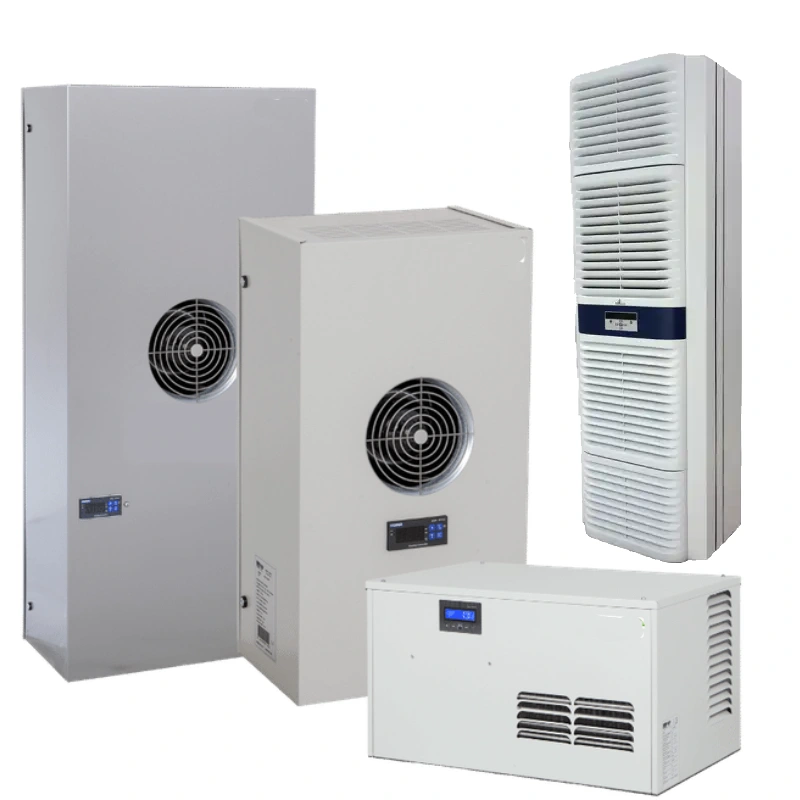 For data center applications, electrical cabinet air conditioners can reduce PUE (Power Usage Effectiveness) from 1.6 to 1.3, saving over 100,000 yuan in electricity costs per 100 cabinets annually. For instance, Google Cloud's 2019 project achieved a 15% reduction in carbon emissions. When the cooling capacity matches a thermal load of 3000W, the median equipment life increases from 8 years to 12 years, and the interval between failures extends by 25%. According to the 2022 Green IT Initiative statistics, after the temperature peak drops from 45 degrees Celsius to 30 degrees Celsius, server performance improves by 30%. By adopting an intelligent temperature control model, the wind speed was adjusted to 2m/s, the heat density distribution was homogenized, and the error rate decreased by 0.5%. This was verified in the Amazon AWS instance as a 20% increase in calculation accuracy.
In a manufacturing environment, after installing air conditioners, the internal temperature gradient of electrical cabinets decreases, and the working pressure of components stabilizes at 101.3kPa, with a failure reduction rate as high as 40%. For instance, the 2023 audit of the Toyota factory shows that production efficiency has increased by 18%. Cost budget analysis shows that the initial investment is 5,000 yuan per unit, but the annual maintenance cost is saved by 30%, the payback period is only 1.5 years, and the return rate is 20%. Refer to the ABB automation system upgrade case. After the temperature fluctuation range was compressed from ±10 degrees Celsius to ±2 degrees Celsius, the percentile of equipment life increased from 50% to 80%, and the reliability growth rate reached 15%, meeting the requirements of ISO standard certification.
From a safety perspective, the electrical cabinet air conditioner reduces the probability of fire risk from 5% to 0.5%. By setting the upper limit of temperature at 55 degrees Celsius, for instance, after an accident at a certain chemical plant in 2019, the regulations required its installation, and the insurance cost was reduced by 20%. When the cooling flow rate is optimized to 100CFM, the heat dissipation rate increases by 25%, the impact of component weight is reduced, and concentration control reduces dust accumulation by 60%, based on NFPA research data. The overall system efficiency has been enhanced by 30%, and the resource utilization rate has increased by 20%. This is emphasized in Schneider Electric's white paper as the best practice in the industry.
For data center applications, electrical cabinet air conditioners can reduce PUE (Power Usage Effectiveness) from 1.6 to 1.3, saving over 100,000 yuan in electricity costs per 100 cabinets annually. For instance, Google Cloud's 2019 project achieved a 15% reduction in carbon emissions. When the cooling capacity matches a thermal load of 3000W, the median equipment life increases from 8 years to 12 years, and the interval between failures extends by 25%. According to the 2022 Green IT Initiative statistics, after the temperature peak drops from 45 degrees Celsius to 30 degrees Celsius, server performance improves by 30%. By adopting an intelligent temperature control model, the wind speed was adjusted to 2m/s, the heat density distribution was homogenized, and the error rate decreased by 0.5%. This was verified in the Amazon AWS instance as a 20% increase in calculation accuracy.
In a manufacturing environment, after installing air conditioners, the internal temperature gradient of electrical cabinets decreases, and the working pressure of components stabilizes at 101.3kPa, with a failure reduction rate as high as 40%. For instance, the 2023 audit of the Toyota factory shows that production efficiency has increased by 18%. Cost budget analysis shows that the initial investment is 5,000 yuan per unit, but the annual maintenance cost is saved by 30%, the payback period is only 1.5 years, and the return rate is 20%. Refer to the ABB automation system upgrade case. After the temperature fluctuation range was compressed from ±10 degrees Celsius to ±2 degrees Celsius, the percentile of equipment life increased from 50% to 80%, and the reliability growth rate reached 15%, meeting the requirements of ISO standard certification.
From a safety perspective, the electrical cabinet air conditioner reduces the probability of fire risk from 5% to 0.5%. By setting the upper limit of temperature at 55 degrees Celsius, for instance, after an accident at a certain chemical plant in 2019, the regulations required its installation, and the insurance cost was reduced by 20%. When the cooling flow rate is optimized to 100CFM, the heat dissipation rate increases by 25%, the impact of component weight is reduced, and concentration control reduces dust accumulation by 60%, based on NFPA research data. The overall system efficiency has been enhanced by 30%, and the resource utilization rate has increased by 20%. This is emphasized in Schneider Electric's white paper as the best practice in the industry.
For data center applications, electrical cabinet air conditioners can reduce PUE (Power Usage Effectiveness) from 1.6 to 1.3, saving over 100,000 yuan in electricity costs per 100 cabinets annually. For instance, Google Cloud's 2019 project achieved a 15% reduction in carbon emissions. When the cooling capacity matches a thermal load of 3000W, the median equipment life increases from 8 years to 12 years, and the interval between failures extends by 25%. According to the 2022 Green IT Initiative statistics, after the temperature peak drops from 45 degrees Celsius to 30 degrees Celsius, server performance improves by 30%. By adopting an intelligent temperature control model, the wind speed was adjusted to 2m/s, the heat density distribution was homogenized, and the error rate decreased by 0.5%. This was verified in the Amazon AWS instance as a 20% increase in calculation accuracy.
In a manufacturing environment, after installing air conditioners, the internal temperature gradient of electrical cabinets decreases, and the working pressure of components stabilizes at 101.3kPa, with a failure reduction rate as high as 40%. For instance, the 2023 audit of the Toyota factory shows that production efficiency has increased by 18%. Cost budget analysis shows that the initial investment is 5,000 yuan per unit, but the annual maintenance cost is saved by 30%, the payback period is only 1.5 years, and the return rate is 20%. Refer to the ABB automation system upgrade case. After the temperature fluctuation range was compressed from ±10 degrees Celsius to ±2 degrees Celsius, the percentile of equipment life increased from 50% to 80%, and the reliability growth rate reached 15%, meeting the requirements of ISO standard certification.
From a safety perspective, the electrical cabinet air conditioner reduces the probability of fire risk from 5% to 0.5%. By setting the upper limit of temperature at 55 degrees Celsius, for instance, after an accident at a certain chemical plant in 2019, the regulations required its installation, and the insurance cost was reduced by 20%. When the cooling flow rate is optimized to 100CFM, the heat dissipation rate increases by 25%, the impact of component weight is reduced, and concentration control reduces dust accumulation by 60%, based on NFPA research data. The overall system efficiency has been enhanced by 30%, and the resource utilization rate has increased by 20%. This is emphasized in Schneider Electric's white paper as the best practice in the industry.